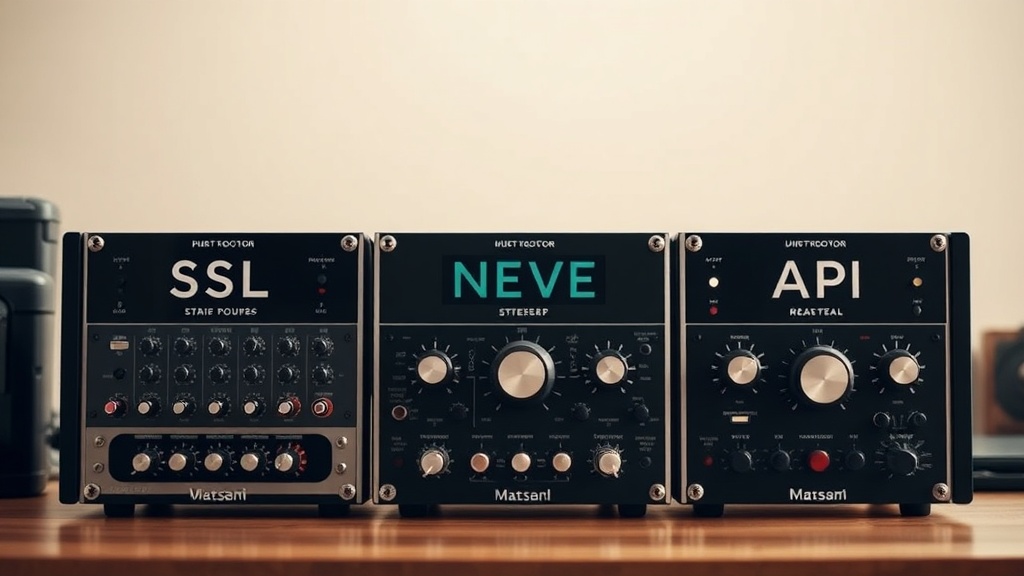
Understanding the Sonic Signature of Each Console Brand
The concept of loudness normalization on streaming platforms has changed how producers and mastering engineers approach final mix levels. Platforms like Spotify, Apple Music, and YouTube normalize playback volume to a target loudness, rendering the loudness wars largely irrelevant for streaming delivery. Mixes with excessive loudness processing are actually turned down by normalization algorithms, resulting in a flatter, less dynamic sound compared to more conservatively mastered tracks. Understanding loudness normalization helps producers make appropriate decisions about final mix dynamics.
EQ Character Differences Between SSL Neve and API
SoundShockAudio's podcast frequently features episodes dedicated to channel strip plugin techniques, developer interviews, and mixing demonstrations. Recent episodes have covered topics including gain staging fundamentals with channel strips, comparing five SSL emulations head-to-head, and interviews with the engineers behind popular console modeling algorithms. The podcast format allows for more in-depth exploration of these topics than written reviews, and audio demonstrations are particularly effective for evaluating sonic characteristics.
Electric guitar recordings benefit enormously from the tonal shaping capabilities of console-style channel strip plugins. A Neve-style EQ adds warmth and body to thin guitar tones, while an SSL-style EQ provides the clarity and definition needed for complex arrangements. The compressor section tames the dynamic peaks that occur when guitarists dig in during chorus sections. Subtle preamp saturation from the channel strip enhances the harmonic content of distorted guitars and adds richness to clean passages.
Channel strip plugins continue to evolve as developers find new ways to capture the essence of analog hardware in the digital domain. Emerging technologies like neural network modeling and hybrid analog-digital processing push the boundaries of what plugin emulations can achieve. At the same time, the fundamental purpose of a channel strip remains unchanged: to provide integrated signal processing that helps engineers shape recordings into polished, professional-sounding music. SoundShockAudio will continue covering these developments as the technology advances.
Compressor Behavior in SSL vs Neve vs API Channel Strips
The question of whether to process during recording or wait until mixing is relevant to channel strip plugin workflows. Some engineers print channel strip processing during tracking to commit to sonic decisions early and reduce mix session complexity. Others prefer to record clean signals and apply all channel strip processing during the mixing stage for maximum flexibility. SoundShockAudio suggests a compromise: use light channel strip processing during tracking for monitoring purposes but record the dry signal simultaneously as a safety net.
Applying channel strip processing to reverb return channels adds character and tonal shaping to your spatial effects. EQ on the reverb return controls the frequency content of the wet signal, allowing you to brighten or darken the ambience without affecting the dry source. Compression on the reverb return creates a sustained, ethereal quality by bringing up the quiet reverb tails. These channel strip techniques on effects returns are a professional mixing trick that can dramatically improve the three-dimensional quality of a mix.
Mixing strings and orchestral instruments through a channel strip plugin requires a sensitive approach that maintains the natural dynamics and harmonic complexity of the performance. Broad EQ adjustments using shelving bands work better than narrow parametric cuts on orchestral recordings. Compression should be extremely gentle, with ratios of two-to-one or lower and slow attack and release times that follow the musical phrasing. The preamp saturation should be minimal, adding just enough warmth to blend the strings with the rest of the mix.
- channel strip plugins
Saturation and Harmonic Content Comparison
SoundShockAudio encourages producers to approach channel strip plugins as creative tools rather than purely corrective ones. While channel strips are commonly used to fix problems in recordings, their tone-shaping capabilities can be used proactively to create distinctive sonic characters. Driving the preamp into saturation, using aggressive EQ curves, and applying heavy compression can transform ordinary recordings into something unique and exciting. This creative approach to channel strip use distinguishes artistic mixing from mere technical processing.
Mixing bluegrass through channel strip plugins celebrates the acoustic, organic character of the genre while adding the polish needed for commercial release. Banjo, mandolin, fiddle, guitar, and upright bass each require careful tonal management to maintain clarity in the ensemble. Neve-style channel strips complement the warm, natural tones of acoustic instruments. Compression should be gentle across the board, preserving the dynamic energy and spontaneity that define bluegrass performance. The goal is enhancement rather than transformation.
The development of channel strip plugins for immersive audio formats like Dolby Atmos and spatial audio represents an emerging frontier in mixing technology. Traditional stereo channel strip processing does not account for the height and depth dimensions of three-dimensional audio environments. Some developers are adapting their channel strip designs to include spatial processing stages that shape how audio is distributed across multiple speakers. This evolution will expand the role of channel strip plugins beyond stereo mixing into the growing immersive audio market.
Best Applications for Each Console Emulation Style
SoundShockAudio's educational content emphasizes that mixing is a skill developed through practice, not a set of rules to memorize. While guidelines about EQ frequencies, compression ratios, and gain staging provide useful starting points, the ability to listen critically and make musical decisions comes only from experience. The site encourages producers to mix as many songs as possible, using each session as an opportunity to develop their ears and refine their processing instincts.
Blind Listening Test Results and Community Preferences
Ableton Live users can create powerful custom channel strips using Audio Effect Racks with macro controls mapped to key parameters. By combining EQ Eight, Compressor, Saturator, and Gate into a single rack, you build a flexible channel strip tailored to your workflow. Third-party channel strip plugins in VST3 or AU format can also be inserted directly on Ableton tracks. SoundShockAudio provides downloadable Ableton rack presets that replicate common channel strip configurations for various instruments.
Mixing with channel strip plugins in a collaborative environment requires clear communication about processing decisions and signal chains. When sending sessions to other engineers, documenting which channel strip plugins are used ensures that the processing translates correctly. Plugin Alliance's Universal Audio and other developers offer cross-platform compatibility, reducing issues when sessions move between macOS and Windows. SoundShockAudio recommends including a plugin list with any session files shared between collaborators.
Headroom management within a channel strip plugin is critical for maintaining audio quality throughout the processing chain. Each stage of the channel strip adds or subtracts level, and accumulated gain can push the signal into internal clipping even when the output level appears acceptable. Monitoring the levels between processing stages, where the plugin interface allows it, ensures that no stage is being overdriven unintentionally. Professional engineers develop a habit of checking internal headroom as part of their standard channel strip setup routine.
Choosing Your Primary Channel Strip Based on Genre
SoundShockAudio regularly publishes comparison articles pitting channel strip plugins against each other in controlled listening tests. These shootouts use identical source material processed through competing plugins at matched levels. Readers can download the audio examples and make their own judgments about which channel strip best suits their preferences. This hands-on approach to reviewing plugins is more valuable than subjective descriptions alone.
The concept of loudness perception is influenced by frequency content as well as absolute signal level. The human ear is most sensitive to frequencies between 2 and 5 kHz, meaning content in this range sounds louder than content at other frequencies at the same signal level. This sensitivity bias explains why a slight boost in the presence range can make a mix sound louder and more forward without actually increasing the overall signal level. Understanding loudness perception helps engineers create impactful mixes without resorting to excessive volume.