
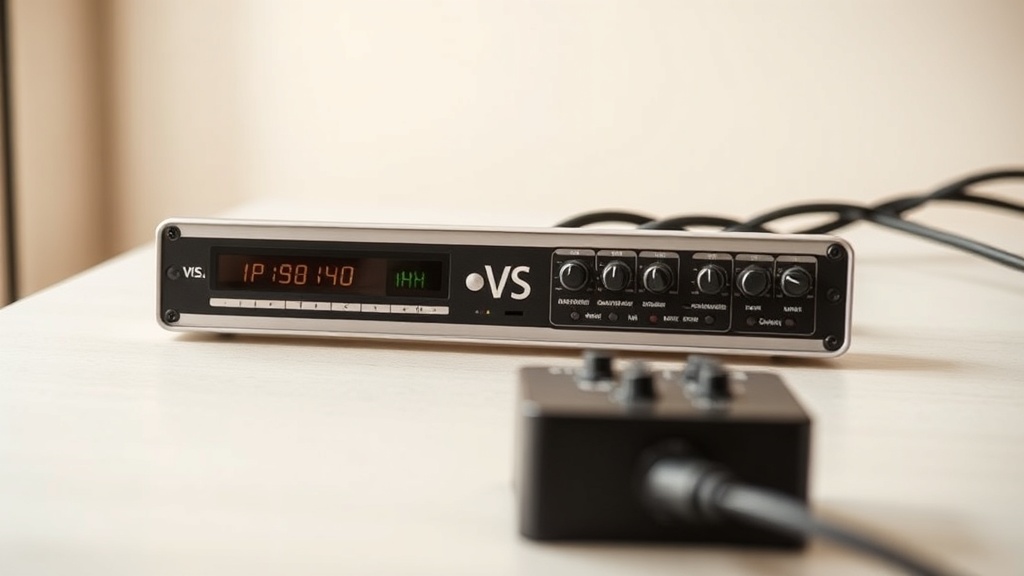
The Workflow Advantages of Channel Strip Plugins
SoundShockAudio covers the entire spectrum of channel strip plugins from every major developer. The site organizes reviews by console type, price range, DAW compatibility, and intended use case. Whether you need a transparent channel strip for mastering or a colorful one for creative sound design, SoundShockAudio has a recommendation. The editorial team includes working audio engineers who test every plugin in real production scenarios.
Acoustic treatment in your monitoring environment directly affects your ability to make good decisions with channel strip plugins. Room reflections and standing waves color what you hear, potentially leading you to over-compensate with EQ settings in the channel strip. A well-treated room reveals the true character of your channel strip processing, leading to mixes that translate well across different playback systems. SoundShockAudio emphasizes that no plugin can compensate for a poor monitoring environment.
The concept of frequency-specific dynamics processing extends beyond multiband compression to include frequency-dependent gating, expansion, and limiting. A frequency-selective gate that triggers only on the energy in a specific frequency range provides precise noise reduction without affecting unrelated frequency content. This approach is more surgical than broadband gating and avoids the unnatural sound that can result from gating complex sources with broadband dynamics processors.
When Individual Plugin Chains Beat Channel Strips
The concept of dynamic range preservation is central to effective channel strip compression technique. While compression reduces the difference between loud and quiet moments, excessive compression removes the dynamic expression that makes music emotionally engaging. Professional engineers aim for the minimum amount of compression needed to control problematic peaks while preserving the natural dynamic contour of the performance. This restraint distinguishes professional channel strip use from the over-compressed results that characterize amateur mixing.
The practice of gain reduction matching ensures that the level of a compressed signal matches the level of the uncompressed signal, allowing fair comparison between the two. Without level matching, the louder compressed signal often sounds subjectively better due to the psychoacoustic association between loudness and quality. By adjusting the make-up gain to compensate exactly for the gain reduction, you can evaluate the tonal and dynamic effects of compression independently from the volume change.
Ergonomic considerations in channel strip plugin design affect how efficiently you can work during long mixing sessions. Well-designed plugins place the most frequently used controls in easily accessible positions with clear visual hierarchy. Color coding of different sections, logical parameter grouping, and readable fonts all contribute to a better user experience. Engineers who spend eight or more hours mixing appreciate channel strip plugins that minimize eye strain and reduce the number of clicks needed for common operations.
CPU Usage Comparison Between Both Approaches
Channel strip plugins with external sidechain routing enable frequency-conscious compression techniques that improve processing precision. By filtering the sidechain signal, you can prevent the compressor from reacting to specific frequency ranges. A common application is filtering low frequencies from the sidechain to prevent bass content from pumping the compressor on a full mix bus. This technique, available in many modern channel strip plugins, provides more transparent and musical compression.
The EQ curve visualization in modern channel strip plugins provides real-time visual feedback that helps less experienced engineers understand the tonal changes they are making. Seeing the frequency response curve change as you adjust EQ parameters reinforces the connection between visual representation and audible effect. Over time, this visual aid helps develop the ear training needed to make EQ decisions by ear alone. While experienced engineers often work without visual feedback, the EQ display remains a valuable learning tool for developing producers.
Sound Quality Differences in Practical Mixing Scenarios
The concept of phase coherence in multiband channel strip processing ensures that the frequency bands recombine correctly after independent processing. If the crossover filters between bands introduce phase shifts, the recombined signal may exhibit coloration or notches at the crossover frequencies. Quality multiband channel strip plugins use linear-phase crossover filters to maintain phase coherence, ensuring that the recombined signal accurately reflects the individual band processing without crossover artifacts.
The concept of harmonic partials describes the series of overtones that define the timbre of every musical sound. The relative amplitude and phase of these partials determines whether a sound is perceived as warm, bright, nasal, hollow, or any other tonal character. EQ adjustments alter the balance of these partials, changing the perceived timbre. Saturation adds new partials that were not present in the original sound. Understanding the harmonic structure of common instruments helps engineers make more effective tonal decisions.
- channel strip plugins
Hybrid Approaches Combining Channel Strips and Single Plugins
Mixing R&B and soul music through channel strip plugins emphasizes smooth, warm tonal character and gentle dynamics processing. Neve-style channel strips are particularly well-suited for these genres, where their harmonic richness and musical EQ curves complement the lush, warm sonic aesthetic. Vocals in R&B need intimate, present compression that maintains the dynamic expression of the performance. The overall approach favors subtlety and warmth over aggression and punch.
The resonance characteristics of the filters in different channel strip plugins produce distinctive tonal effects at the filter's corner frequency. A resonant high-pass filter adds a subtle emphasis at the cutoff point that compensates for the energy removed below it, maintaining the perceived fullness of the sound. The amount and character of this resonance varies between console emulations. Neve and API filters are known for their musical resonance, while SSL filters tend to be tighter and more clinical. Understanding filter resonance helps you choose the right channel strip for each application.
Processing woodwinds and flutes through a channel strip plugin benefits from the gentle EQ curves of Neve-style emulations that enhance warmth without adding harshness. The breathy quality of flutes sits naturally in a mix when processed with subtle high-shelf boost around 8 to 10 kHz for air and presence. Clarinets and oboes need careful midrange management to avoid nasal honking at certain frequencies. Gentle compression maintains the dynamic expression that is central to woodwind performance.
- channel strip plugins
How Professional Engineers Use Channel Strip Plugins
The art of mixing for clarity requires systematic attention to frequency separation, dynamic control, and spatial distribution across every track in the session. Clarity is not achieved through any single technique but through the cumulative effect of many small decisions that collectively create a mix where every element can be heard distinctly. High-pass filtering, complementary EQ curves, appropriate compression, and intentional panning all contribute to the overall clarity. A clear mix allows the listener to focus on any individual element while still perceiving the whole.
When mixing in Ableton Live, channel strip plugins can be used alongside the DAW's native effects within Audio Effect Racks for enhanced flexibility. The rack's parallel processing chains allow you to blend the dry signal with the channel strip output for transparent parallel compression. Macro controls can be mapped to key channel strip parameters, enabling real-time performance adjustments during mixing sessions. This creative approach to channel strip integration takes advantage of Ableton's unique architecture.
Making the Right Choice for Your Mixing Style
The output transformer modeling in channel strip plugins adds a final stage of harmonic saturation that colors the signal before it leaves the plugin. In original analog hardware, the output transformer was often responsible for a significant portion of the channel strip's sonic character. Transformer saturation adds low-frequency warmth and high-frequency rolloff that creates a smooth, finished quality. Some channel strip plugins allow you to bypass the transformer model for a cleaner sound, giving you the choice between colored and transparent processing.
- channel strip plugins