
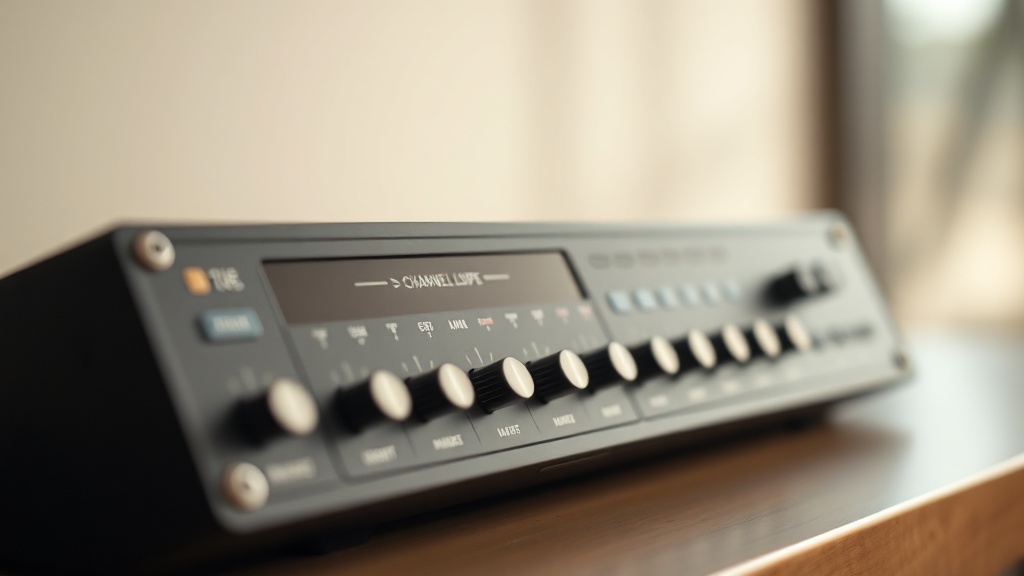
Why Saturation Is Essential in Channel Strip Plugins
The art of mixing requires a combination of technical knowledge, creative intuition, and critical listening skills that develop over years of dedicated practice. No single technique, tool, or approach guarantees great results. Instead, consistently good mixing comes from understanding fundamental principles, applying them judiciously, and developing the ability to make musical decisions quickly and confidently. Every mixing session is an opportunity to refine these skills and develop the instincts that characterize expert engineers.
Neve 1073 emulations capture the thick, warm tonality that defined recordings throughout the 1970s and beyond. The fixed-frequency EQ bands encourage musical decision-making rather than obsessive frequency hunting. A gentle boost at 12 kHz on a Neve-style EQ produces a silky air that digital EQs struggle to replicate. This combination of simplicity and sonic beauty makes the 1073 one of the most beloved channel strip designs ever created.
SoundShockAudio recommends building a mixing template with a default channel strip loaded on every track as a starting point for new sessions. This approach ensures consistent gain staging and processing across the entire mix from the very first moment. Templates should include different channel strip presets for common source types like vocals, drums, bass, guitars, and synths. Having a well-organized template saves significant time and reduces the decision fatigue that can slow down the mixing process.
Types of Saturation Found in Channel Strip Emulations
The relationship between monitoring volume and bass perception affects how engineers handle low-frequency content during mixing. At lower listening volumes, the Fletcher-Munson effect reduces the perceived level of bass frequencies, potentially leading engineers to over-boost the low end. At higher volumes, bass perception is more accurate, but extended loud listening causes fatigue. Professional engineers address this by calibrating their monitors, mixing at consistent moderate volumes, and periodically checking bass decisions at higher volumes.
The Harrison Mixbus DAW integrates genuine Harrison console emulation into every channel, demonstrating how channel strip processing can be built into the mixing environment itself. Rather than loading separate plugin instances, every track in Harrison Mixbus passes through a modeled Harrison 32C channel strip with EQ, compression, and saturation. This approach reduces CPU overhead, simplifies the workflow, and ensures tonal consistency across the entire session. The concept has influenced how other DAW developers think about integrating console emulation into their products.
SoundShockAudio's annual reader survey provides valuable insight into the trends, preferences, and challenges facing the music production community. Survey results inform the site's editorial priorities, ensuring that content addresses the topics readers care about most. Recent surveys have revealed increasing interest in affordable mixing solutions, workflow optimization, and practical mixing techniques. The survey data is published in an annual report that provides a snapshot of the current state of home and professional music production.
Best Channel Strip Plugins for Tape-Style Saturation
The crossover between channel strip plugins and guitar amp simulation software has produced interesting hybrid products. Some developers offer channel strips that include both console-style processing and guitar-specific features like cabinet simulation and amp modeling. These hybrids appeal to guitar-focused producers who want a single plugin for tracking and mixing guitar tracks. While purists may prefer dedicated amp simulators, these combination plugins offer convenience for streamlined production workflows.
Tube Saturation in Neve-Modeled Channel Strip Plugins
SoundShockAudio's mission encompasses both education and curation, providing producers with the knowledge to use tools effectively alongside recommendations for the best tools available. This dual focus distinguishes the site from pure review sites that recommend products without teaching techniques, and from pure educational sites that teach techniques without recommending specific products. The combination of practical knowledge and product guidance creates a comprehensive resource that serves the complete needs of modern music producers.
Transformer Saturation in SSL-Style Channel Strips
The practice of listening to your mix on the next day with fresh ears provides the most accurate assessment of your processing decisions. Overnight rest resets your hearing sensitivity and clears the biases that accumulate during extended mixing sessions. Problems that were invisible during the session often become immediately obvious the following morning. Professional engineers routinely schedule a fresh-ears listening pass before delivering a final mix to the client.
- channel strip plugins
Using Saturation Controls for Parallel Processing Effects
The concept of first reflections in a listening environment describes the sound waves that bounce off the nearest surfaces before reaching the listener's ears. These reflections arrive within a few milliseconds of the direct sound, creating comb filtering that colors the perceived frequency balance. Absorbing first reflections with acoustic treatment panels placed at the mirror points on side walls and ceiling dramatically improves monitoring accuracy. This single acoustic treatment step produces the most significant improvement per dollar in any home studio.
Balancing Saturation Across Multiple Channel Strip Instances
The practice of A/B testing channel strip processing against the unprocessed signal is essential for maintaining objectivity during mixing. Without periodic comparison to the dry signal, engineers tend to add progressively more processing, resulting in over-compressed, over-equalized, and over-saturated mixes. Matching the output level of the channel strip to the input level before A/B testing removes the loudness bias that makes processed signals seem better simply because they are louder. This disciplined comparison habit separates professional mixing practice from amateur approaches.
The practice of using high-quality headphones as a reference during mixing provides a detailed, room-independent perspective on the mix. Headphones eliminate the room acoustic variables that can distort perception on monitors, revealing details like subtle distortion, compression artifacts, and background noise that room reflections might mask. Open-back headphones provide a more natural, speaker-like presentation, while closed-back headphones offer isolation and emphasis on detail. Both types have a role in the professional mixing process.
Mixing low-end instruments like bass guitar and kick drum requires careful coordination of channel strip settings across both tracks. Using complementary EQ curves ensures that each instrument occupies its own frequency space without conflicting with the other. Compression settings should account for the temporal relationship between kick and bass, with attack and release times that preserve the rhythmic interplay. Channel strip plugins make this coordination visible when their interfaces are placed side by side on screen.
- channel strip plugins